

As America celebrates 250 years and Colorado 150, we are all taking a look back at the history that shaped the world we now live in. Progress in every industry has shaped America, and healthcare is no different, including the history of mental health treatment. While many people know that George Washington died from blood loss while the doctors thought bleeding him more would cure him, did you know that John Adams likely struggled with Bipolar Disorder?
Mental healthcare has changed so much in America's 250 years. Here's a look at that history of mental health treatment. We want to take you back to see just how far we've come. Rewind.
Mental Healthcare: A Timeline in US History
- 1776 – The Signing of the Declaration of Independence
- Almshouses: Mental health treatment is almost non-existent. Most people experiencing mental illness are cared for by family, indentured out as laborers, or housed in jail or almshouses.
- The Public Hospital for Persons of Insane and Disordered Minds in Williamsburg, Virginia (1773) was the only public facility dedicated to mental healthcare, marking the earliest chapter in the history of psychiatric hospitals in America.
- 1783–1812 – Benjamin Rush’s ‘Moral Treatment’ Principles
- Father of American Psychiatry: Benjamin Rush, a signer of the Declaration of Independence, published Medical Inquiries and Observations Upon the Diseases of the Mind (1812), the first systematic American textbook on psychiatry. Rush advocated moving away from jailhouses and penal systems for the mentally ill to human-centered care. This "moral treatment" combined occupational routines, physical activity, and biological treatments.
- 1841–1854 – Dorothea Dix Advocates for Asylum Reform & Land-Grant Bill
- Bill for the Benefit of the Indigent Insane: Dorothea Dix conducted investigations of jails, almshouses, and private homes across the U.S., documenting severe neglect and abuse of individuals with mental illnesses. Congress passed her Bill for the Benefit of the Indigent Insane, allocating 10 million acres of federal land to fund psychiatric hospitals nationwide.
- The Veto: President Franklin Pierce vetoed the bill, establishing a legal precedent that social welfare and psychiatric care were state, not federal, responsibilities for nearly a century.
- 1876 – Colorado Statehood & Constitutional Mandates for Care
- Statehood Granted: On August 1, 1876, President Ulysses S. Grant admitted Colorado to the Union as the 38th
- Constitutional Care: Article VIII, Section 1 of the original 1876 Colorado Constitution explicitly established that institutions for the benefit of individuals who are "insane" or otherwise in need of public support "shall be established and supported by the State in such manner as may be prescribed by law."
- 1879 – Establishment of the Colorado State Insane Asylum in Pueblo
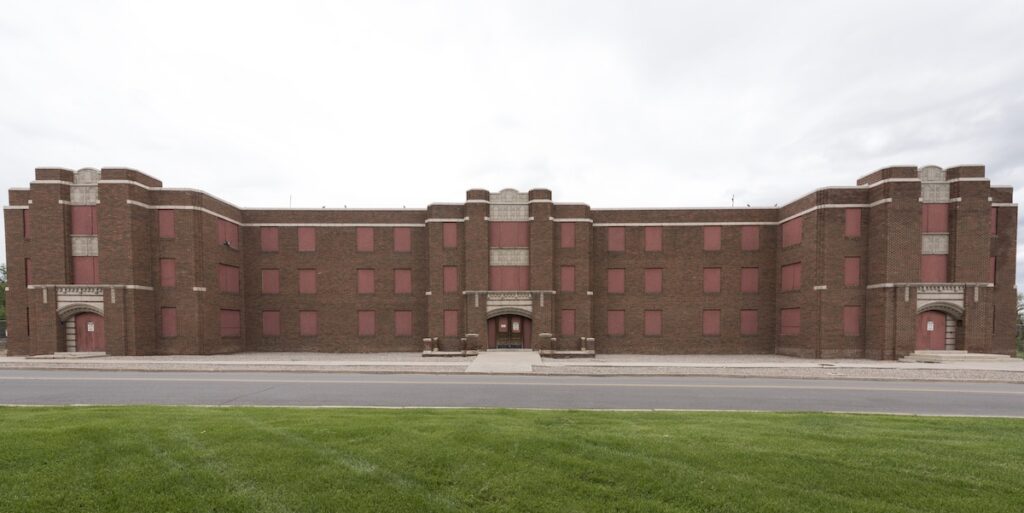
- Fulfilling the Constitution: The Colorado General Assembly authorized the creation of the state's first dedicated psychiatric facility in Pueblo, transferring 11 patients from the care of jails. – This facility is still open today as the Colorado Mental Health Hospital in Pueblo!
- 1908–1909 - Clifford Beers and the National Mental Hygiene Movement
- Lived Experience Reform: Following his own stays in private and state institutions, Clifford Beers published his autobiography, A Mind That Found Itself, exposing widespread maltreatment in psychiatric wards.
- National Committee for Mental Hygiene: Beers’ advocacy continued into co-founding the National Committee for Mental Hygiene (now Mental Health America).
- 1946 – The National Mental Health Act Creates NIMH
- Post-WWII Reform: Recognizing the severe psychiatric impact of WWII on veterans, President Harry S. Truman signed Public Law 79-487 (The National Mental Health Act). The legislation authorized significant federal funding for psychiatric research, university clinical training programs, and state community mental health grants, leading to the formation of the National Institute of Mental Health (NIMH) in 1949.
- 1963 – The Community Mental Health Act (CMHA)
- Landmark Federal Law: President John F. Kennedy signed Public Law 88-164 (The Community Mental Health Act). The law authorized federal grants to construct local Community Mental Health Centers (CMHCs) nationwide. This shifted long-term care away from large state hospitals toward outpatient community treatment. Mental healthcare was now in your local community.
- 1975 – Founding of Aurora Mental Health Center
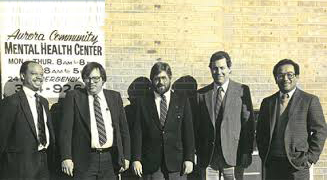
- Grassroots Community Action: Driven by locals led by educator Ellin Mrachek, a citizen's committee formed to address the lack of local behavioral health resources for families and military personnel in the rapidly expanding city of Aurora. They created Aurora Mental Health Center (AuMHC), opened on July 1, 1975, as a 501(c)(3) nonprofit CMHC within and for the community. AuMHC created localized mental healthcare for the Aurora community, fulfilling Ellin Mrachek’s dream.
- Rebranding: In 2023, AuMHC would rebrand as Aurora Mental Health & Recovery (AMHR).
- 1999 – Supreme Court Olmstead Ruling & Community Integration Mandate
- Civil Rights Precedent: In Olmstead v. L.C. (527 U.S. 581), the U.S. Supreme Court ruled that under Title II of the Americans with Disabilities Act (ADA), unnecessary institutionalization of individuals with mental disabilities constitutes unlawful discrimination. This meant that states, including Colorado, were to expand community-based services, supported housing, and integrated care plans, furthering deinstitutionalization, to allow individuals to receive treatment in the least restrictive setting possible. No more unnecessary long-term live-in mental healthcare.
- 2022 – Colorado Establishes the Behavioral Health Administration (BHA)
- System Restructuring: Following recommendations from the Governor's Behavioral Health Task Force, the Colorado General Assembly enacted House Bill 22-1278 to create the cabinet-level Behavioral Health Administration (BHA). This was to consolidate fragmented state funding, standardize quality and safety monitoring across safety-net providers, and improve equity and access in underserved regions.
- 2022 – Nationwide 988 Lifeline & Colorado Crisis Integration
- Federal Designation: Under the National Suicide Hotline Designation Act of 2020, 988 officially went live in July 2022 as a nationwide 3-digit dialing and texting code for mental health emergencies. Callers could have mobile crisis dispatch teams sent to them or be referred to local crisis centers such as AMHR.
- 2026 – AMHR Opens the Potomac Pavilion

-
- A Groundbreaking Center: In January 2026, AMHR opened the Potomac Pavilion, which houses its 988-connected Crisis Center, Withdrawal Management, Medication-Assisted Treatment, Crisis Walk-In Clinic, and Connect to Care teams. The Potomac Pavilion created a groundbreaking one-stop shop for accessing behavioral healthcare in Aurora.
Bonus Fact:
Mental healthcare has even changed its name 5 times in the past 250 years! Today, the term ‘behavioral healthcare’ is the professionally accepted terminology. It bridges 2 historically distinct but connected fields (as seen at the Potomac Pavilion): mental health and addiction recovery.
